

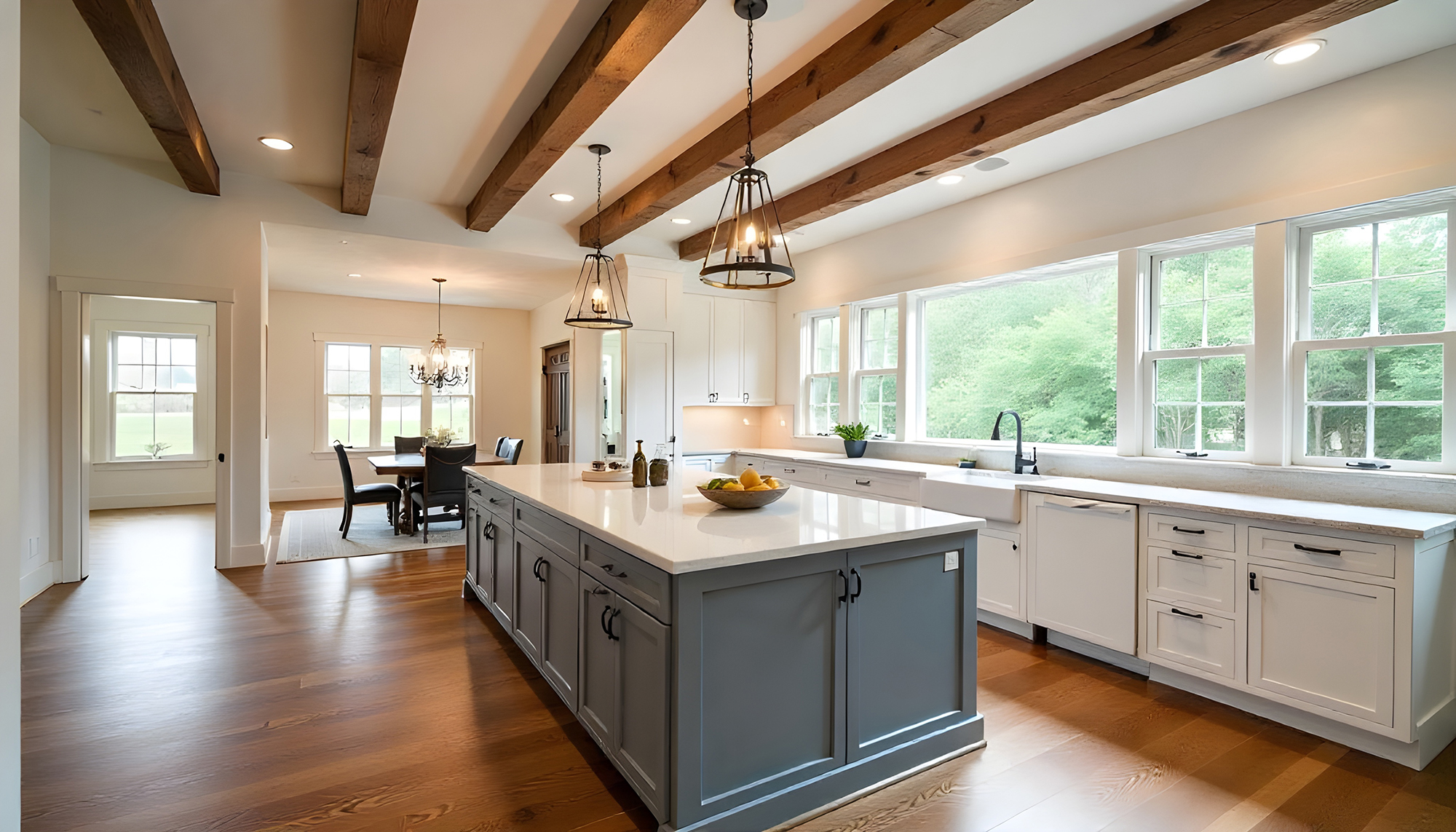
The kitchen has changed dramatically over the years. Once treated as a separate utility space, today's kitchen is often one of the central gathering areas of the home. Families cook, eat, entertain, work, and spend time together in the same space, which has made the flooring decision more important than ever.
For homeowners who love the appearance of natural wood, one question comes up frequently: can hardwood flooring be used in the kitchen? The answer is that hardwood can be a beautiful option, but the decision should be made with the realities of the room in mind. Kitchens experience spills, dropped objects, food particles, changing household activity, and frequent foot traffic, so the flooring needs to be selected and cared for accordingly.
For Huntington Station homeowners planning a kitchen renovation, understanding the practical considerations before choosing hardwood can make the difference between a floor that simply looks good on installation day and one that continues to complement the home for years.
Why Hardwood Works So Well Visually in Kitchens
One of the biggest reasons homeowners consider hardwood for kitchens is continuity. Open-concept homes often connect the kitchen directly to the dining room, living room, or family room. Using the same flooring across these spaces can make the entire area feel larger and more cohesive.
Instead of creating a visual boundary between the kitchen and adjacent living spaces, hardwood allows the rooms to flow into one another. Cabinets, islands, countertops, and furniture can then define the different functions of the space without relying on a change in flooring.
This is particularly effective when the kitchen has an open layout. A consistent floor can create a calmer visual foundation, allowing architectural details and furnishings to become the focus.
Hardwood also introduces natural grain and variation into a room that may otherwise contain many hard, manufactured surfaces. Cabinets, appliances, countertops, and backsplashes can all feel more connected when they sit above a natural wood floor.
But Kitchens Are Harder on Floors
The attractive appearance of hardwood does not eliminate the practical challenges of a kitchen. Water and other liquids can be spilled, food can fall, chairs can move repeatedly across the floor, and heavy objects can occasionally be dropped.
That means homeowners should consider the way they actually use their kitchen rather than choosing hardwood solely because they like the look.
A household that cooks frequently and spends several hours a day in the kitchen will have different requirements from a household that primarily uses the kitchen for quick meals and occasional entertaining. Children and pets can add even more activity.
The important question is not whether a kitchen is too busy for hardwood. Instead, homeowners should determine whether the selected hardwood, installation, maintenance routine, and household habits are compatible.
Hardwood and Everyday Spills
Spills are one of the first concerns people raise when discussing hardwood flooring in kitchens. Accidents happen, especially around sinks, dishwashers, refrigerators, and cooking areas.
The key is not expecting the floor to be completely unaffected by moisture. Hardwood is a natural material, and homeowners should respond to spills promptly rather than allowing liquid to remain on the surface.
Simple habits can help. Wipe up spills when they occur, pay attention to areas around sinks and appliances, and use appropriate cleaning products recommended for the flooring. Mats can also be used strategically in areas where splashes are more likely.
The goal is to make the kitchen work with the flooring rather than treating hardwood as a material that requires no care. Like any natural flooring, it should be maintained according to the manufacturer's recommendations.
Open-Concept Kitchens Are a Strong Use Case
One of the strongest arguments for hardwood in a kitchen is the visual continuity it creates in an open floor plan. Imagine a kitchen connected directly to a dining area and living room. If each space uses a different floor, the transitions can visually divide the rooms.
Hardwood can create the opposite effect. A continuous floor can make the entire area feel like one connected environment, even when the furniture arrangement creates distinct zones.
This can be particularly useful in smaller homes where homeowners want the space to feel open. Fewer visual breaks can make the overall floor plan appear more unified.
Instead of using flooring to tell people where one room ends and another begins, homeowners can use furniture, rugs, lighting, and cabinetry to establish those zones while allowing the floor to connect everything underneath.
How Cabinet Colors Affect Hardwood Selection
Kitchen flooring should never be selected independently from the cabinetry. Cabinets occupy a large amount of visual space, so the relationship between the wood floor and cabinetry can determine whether the finished kitchen feels balanced.
Matching the floor exactly to the cabinets is not always necessary. In fact, too much matching can make the kitchen feel flat. A better approach is often to coordinate undertones while allowing the two materials to remain visually distinct.
Warm cabinetry can work with a hardwood floor that contains complementary warm undertones without being identical in color. White or light cabinets can provide a neutral backdrop for a range of wood tones, while darker cabinets may benefit from a floor that creates enough contrast to prevent the room from feeling visually heavy.
Before choosing a floor, place hardwood samples against cabinet samples whenever possible. Looking at the materials separately can be misleading because the surrounding colors influence how each one appears.
What About Hardwood Around a Kitchen Island?
The area around a kitchen island receives significant daily traffic. People stand there to prepare meals, sit on stools, move around the island, and frequently walk through the same paths.
This makes the island area an important part of the flooring decision. Homeowners should consider how much traffic occurs around the island and whether chairs or stools will regularly move across the floor.
Protective pads or appropriate furniture glides can help reduce unnecessary wear from movable furniture. Good housekeeping also matters because small particles of dirt and grit can become abrasive when repeatedly walked over.
The island should also be considered as part of the overall visual composition. A large island can create a strong contrast against the floor, particularly when the cabinetry is significantly lighter or darker than the wood.
How Pets Change the Decision
Pets can make kitchen flooring decisions more complicated because the kitchen is often one of the busiest areas of the home. Dogs may move repeatedly between the kitchen and other rooms, while food and water bowls may be positioned on or near the flooring.
Pet owners should consider how claws, water spills, and daily traffic fit into their maintenance routine. A practical finish and appropriate cleaning habits can make hardwood more manageable, but homeowners should still be realistic about the fact that natural flooring can show signs of life over time.
For some homeowners, that character is part of the appeal. The objective is to choose a floor whose aging pattern fits your expectations rather than expecting a busy kitchen floor to remain completely untouched.
Can Hardwood Make a Kitchen Feel Warmer?
Absolutely. Kitchens can contain many hard surfaces: stone countertops, metal appliances, glass, cabinetry, and other solid materials. Hardwood introduces a natural material that can soften the overall visual effect.
Even a contemporary kitchen can feel more welcoming when natural wood is incorporated into the floor. The grain introduces variation and texture, preventing the space from becoming a collection of completely uniform surfaces.
This can be especially effective when paired with simple cabinetry and restrained finishes. Rather than competing with the kitchen's design, the floor can become the quiet foundation that connects the other elements.
The natural appearance of hardwood can also help bridge the kitchen with adjoining living spaces. Instead of making the kitchen feel like a separate work area, the floor can make it feel like a natural part of the home's main living environment.
Choosing a Hardwood Finish for a Kitchen
Finish is another factor homeowners should consider. The appearance of a floor changes significantly depending on whether the surface has a more understated or reflective appearance.
A highly reflective surface can make a room feel polished, but it may also make everyday marks more noticeable. A more subdued appearance can provide a relaxed look and may be easier to integrate into an informal family kitchen.
The right choice ultimately depends on the style of the home and the level of visual maintenance the homeowner prefers. Samples should be viewed in the actual kitchen environment whenever possible.
Do not make the finish decision based only on how the sample looks under showroom lighting. Consider how it will interact with sunlight, kitchen lighting, cabinet colors, and the other surfaces throughout the room.
Think About the Kitchen Before You Choose the Floor
One of the most useful steps is to evaluate the room itself before looking at individual products. Where does water most often reach the floor? Where do people walk? Where are the stools positioned? Where do pets eat? Which areas receive direct sunlight?
These questions can help you understand how the floor will function after installation. They also make conversations with a flooring professional more productive because the recommendation can be based on your actual space rather than a generic idea of what a kitchen should have.
Think about traffic patterns as well. If everyone enters the home through the kitchen, that portion of the floor may experience substantially more activity than a kitchen that is separated from the main entrance.
Hardwood Can Also Connect Older and Newer Areas
Many Huntington Station homes combine older architectural details with updated kitchens. A carefully selected hardwood floor can help bridge those two styles.
Instead of making the kitchen look completely disconnected from the original character of the house, wood flooring can provide a natural transition between traditional details and modern cabinetry or appliances.
Homeowners who are renovating only part of the house should consider how the new floor relates to the existing floors in adjacent rooms. If a new kitchen floor will meet another flooring material, the transition should be considered during the design stage rather than after the installation is complete.
Sometimes the strongest result comes from creating a deliberate contrast rather than attempting to make new flooring look exactly like an older floor that was installed years earlier.
When Another Flooring Option May Make More Sense
Hardwood is not automatically the best flooring for every kitchen. Homeowners who expect particularly demanding moisture conditions, want a floor that requires less attention, or simply prefer another appearance may find a different flooring category more appropriate.
The right flooring decision is ultimately about matching the product to the household. A beautiful floor that does not suit the way your family uses the kitchen can become frustrating. Conversely, a floor that fits your lifestyle can make the room much more enjoyable.
That is why it is worth comparing materials rather than assuming that one flooring type is universally superior. Think about appearance, maintenance, traffic, household habits, and how the flooring will connect with the rest of the home.
How to Build a Cohesive Flooring Plan
If hardwood is selected for the kitchen, think about the surrounding rooms at the same time. An open floor plan may benefit from continuing the hardwood through adjacent areas. A more traditional layout may call for a transition between materials.
Furniture, rugs, cabinetry, wall colors, and lighting can all help define zones without requiring a flooring change. This approach can make a home feel more intentional and reduce the visual fragmentation that sometimes occurs when every room receives a completely different floor.
If hardwood is part of your renovation plan, explore hardwood flooring from Apple Floor Covering to compare styles that could work with your kitchen and surrounding spaces.
Looking at the flooring plan across several connected rooms can also prevent an attractive kitchen floor from creating an awkward transition into the next room.
Maintenance Should Be Part of the Design Decision
Maintenance is not something to think about after the floor has been selected. It should be part of the decision from the beginning.
Ask yourself how much time you are willing to spend cleaning the floor, how quickly your household responds to spills, whether pets regularly enter the kitchen, and whether you are comfortable with a natural material developing character over time.
These questions may lead you toward one finish, color, or flooring construction over another. They can also help you establish realistic expectations about what the floor will look like several years after installation.
Following the manufacturer's recommended cleaning and maintenance practices is also important. Hardwood should not be treated like a completely maintenance-free surface simply because it is durable.
Consider the Whole Kitchen, Not Just the Floor
The strongest kitchen designs usually come from coordination rather than matching. The flooring should support the cabinets, island, countertops, backsplash, appliances, and lighting rather than trying to compete with them.
Hardwood is particularly effective when homeowners allow its natural variation to remain visible. Instead of selecting a floor that looks completely uniform, consider how the grain and color variation contribute to the character of the room.
Natural materials can remain visually relevant as the surrounding design evolves. A kitchen can be repainted, cabinet hardware can be changed, and furniture can be replaced. A well-selected hardwood floor can continue to work through those changes.
Is Hardwood Right for Your Kitchen?
For many homeowners, the answer can be yes. Hardwood can bring warmth, continuity, character, and visual sophistication to a kitchen, particularly when the room connects directly to other living spaces.
But the best result comes from making the decision with realistic expectations. Kitchens are active environments, and flooring should be selected according to the way your household cooks, cleans, entertains, and moves through the space.
Think about moisture, traffic, pets, cabinetry, finish, maintenance, and the relationship between the kitchen and neighboring rooms. Once those factors are clear, comparing hardwood options becomes much easier.
If you are planning a kitchen renovation in Huntington Station or throughout the surrounding Long Island area, contact Apple Floor Covering to discuss your flooring needs. The right hardwood can do more than cover the kitchen floor; it can help connect the entire living space into one cohesive home.


